
Customer Analysis
Overview
We took Acme Co’s customer base and ran it through our model. The overall analysis across all 5 active stores is below. You can see an explanation of each persona further down the page.
Overall persona mix (all 5 active stores)
Commercial personas
Demographic personas
What this tells us
Acme Co’s customer base skews toward:
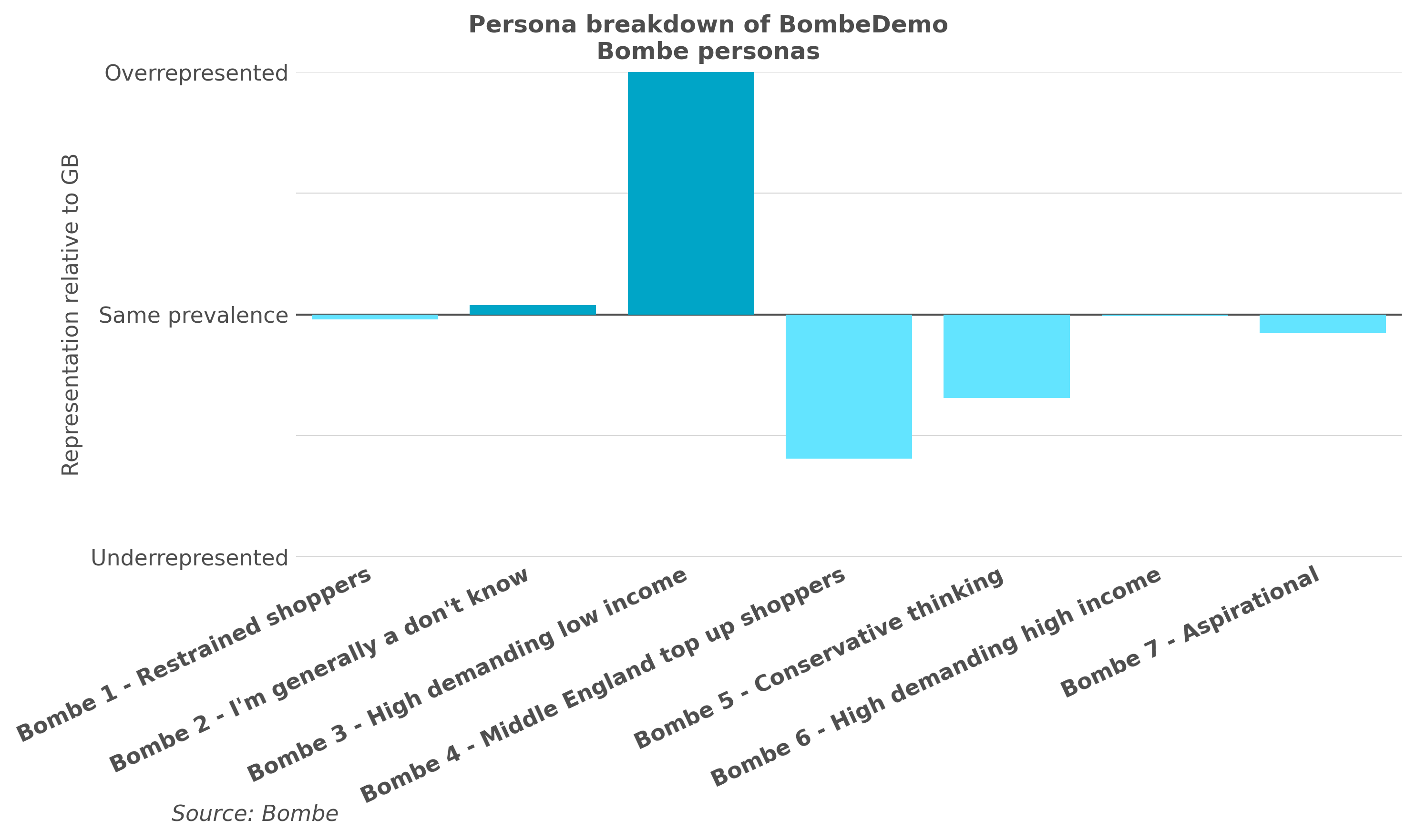
Commercial personas
- High demanding low income shoppers are significantly over-represented and are the main target customer — price- and ethics-sensitive people with strong opinions on what they buy, who earn less than the high-demanding high-income cohort
- “I’m generally a don’t know” shoppers are slightly over-indexed — a lower-spending group overall, but one that does spend on clothes
- High demanding high-income shoppers (the group that typically spends the most) sit roughly at the GB baseline — notable because a premium retail business might expect this group to dominate
- Middle England top-up shoppers are the most under-represented persona; Conservative thinking is moderately under, and Restrained shoppers and Aspirational are both slightly under-indexed
Demographic personas
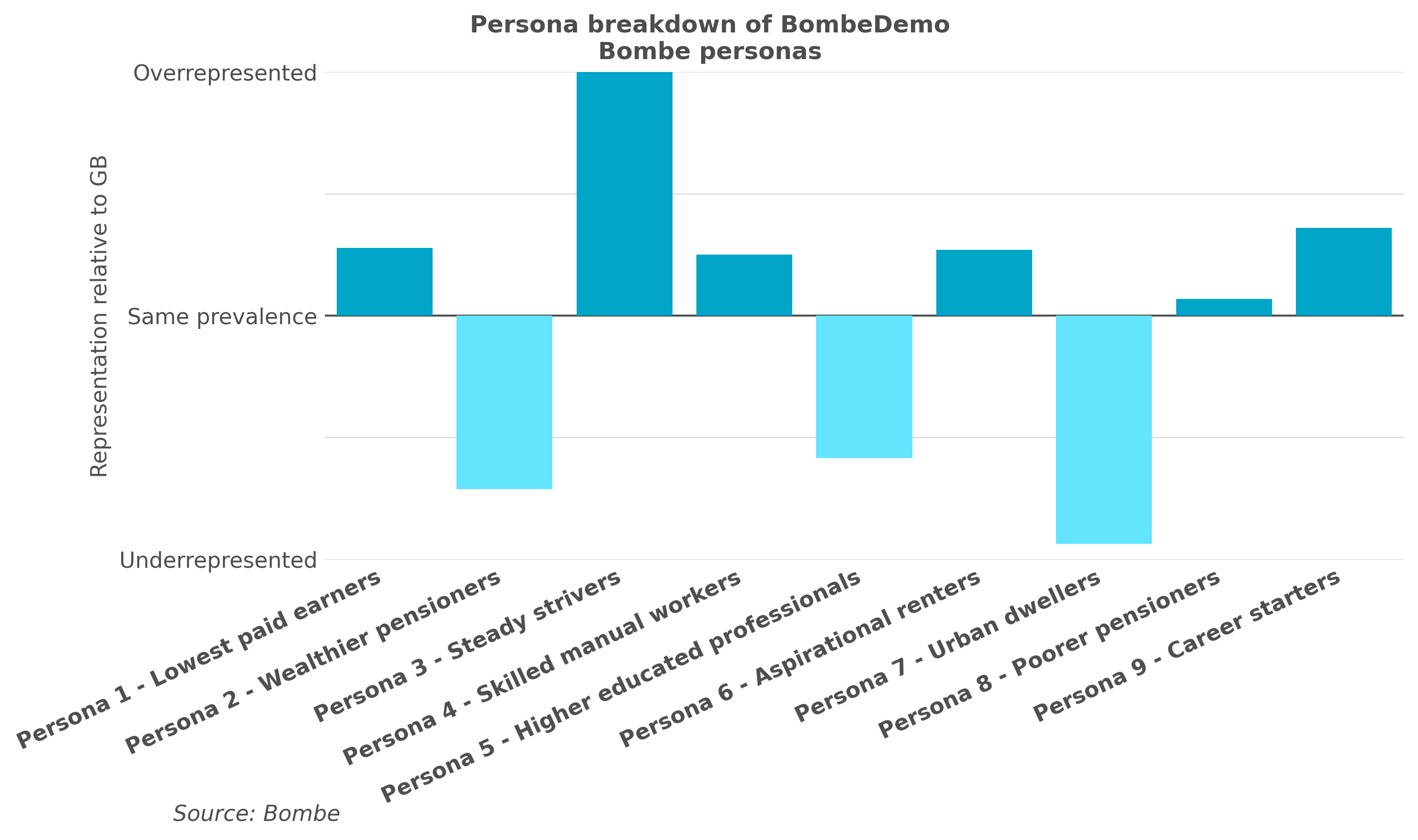
- Steady strivers are the main demographic target — significantly over-represented: people over 40 who have worked in average-wage jobs most of their lives, content with family and community but who hoped to have achieved more financially and professionally
- Lowest paid earners, Skilled manual workers, Aspirational renters, and Career starters are all moderately over-indexed; Poorer pensioners are slightly over
- Urban dwellers are the most under-represented demographic by a clear margin
- Wealthier pensioners and Higher educated professionals are both significantly under-represented — the two cohorts a premium-London retail business would typically count on
Across the sites there is very little difference in the persona mix — Acme Co’s customer profile is broadly consistent across catchments.
What stands out is the Steady Striver core — people over 40 in average-wage work, content with family and community but with unfulfilled financial and professional aspirations. This core is reinforced by a broad base of moderately over-indexed secondary cohorts: Lowest Paid Earners, Skilled Manual Workers, Aspirational Renters, and Career Starters. The three most under-represented demographics are Urban Dwellers, Wealthier Pensioners, and Higher Educated Professionals.
The core customer
- People over 40 in average-wage work, content with family and community but with unrealised financial or professional aspirations (Steady Strivers)
- Price- and ethics-conscious shoppers with strong opinions but more constrained budgets than traditional high-spenders
- Broad secondary cohorts spanning lowest paid earners, skilled manual workers, aspirational renters, and career starters
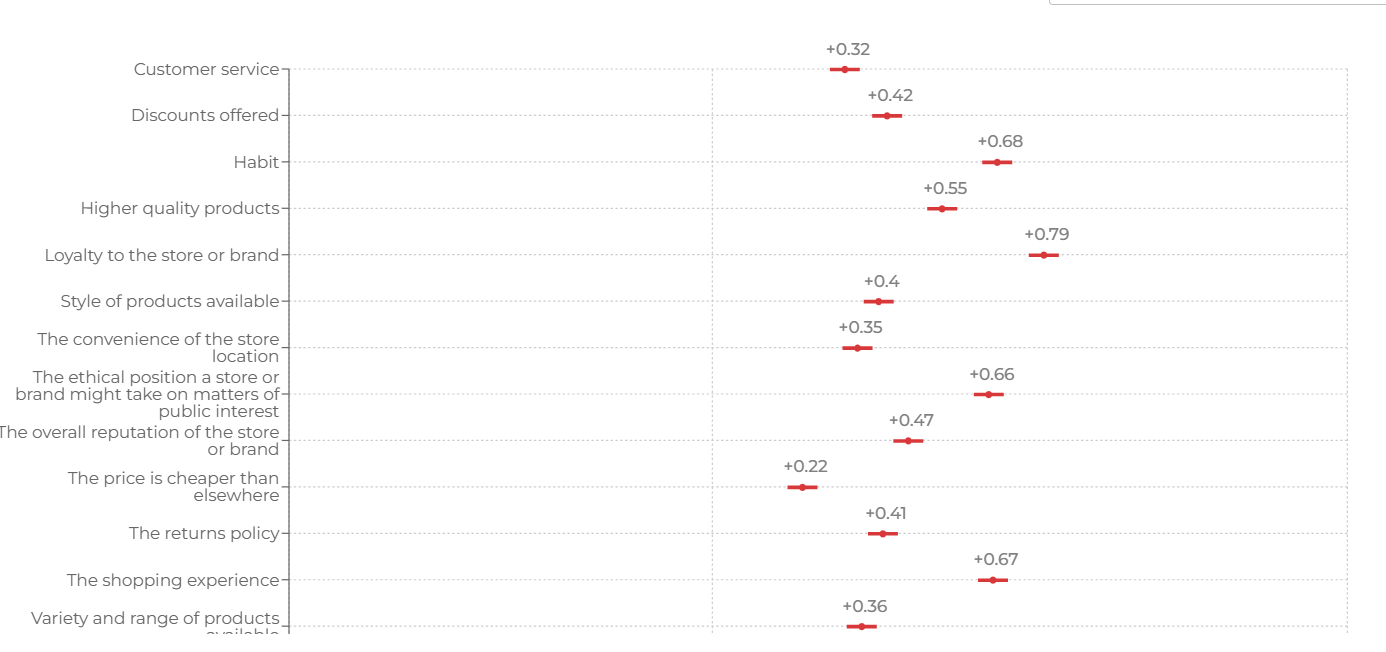
Key motivators of this audience
Relationship with the brand
With a core of Steady Strivers, brand relationship matters in practical terms — reliability and consistency over flash. Secondary cohorts (skilled manual workers, aspirational renters, career starters) respond to brand signals tied to pragmatic value and social mobility.
Quality and provenance of the product
The target customer earns less than the high-demanding high-income group but shares their concern with price, ethics, and product standards. That means ethical provenance, transparent sourcing, and clear value framing do more work than premium positioning alone.
Site-level comparison
Persona mix by store
Explaining revenue
The more an area has the correct customer mix travelling into and living in it, the higher revenue is. Inner-London sites such as Oxford Street and Covent Garden tend to have a higher supply of the target customer than outer-London catchments, which is reflected in the revenue forecast. It is simply a numbers game.
Persona key — definitions▼
Demographic
- Lowest paid earners
- People who earn below the average wage or are unemployed, are likely to receive benefits and likely to live in social housing.
- Wealthier pensioners
- People who are either retired or in the later stages of their career. They own their own home likely without a mortgage and tend to have worked in higher wage jobs. They are well off financially.
- Steady strivers
- People over 40 who have worked in the same or similar average wage job most of their life. They are content with their family and community but hoped to have achieved more financially and professionally.
- Skilled manual workers
- People who are not university educated but likely to earn higher than average salary from skilled trade like building work or black taxis. This group is more likely to have Conservative values and read newspapers like the Sun.
- Higher educated professionals
- People who are university educated, earn higher than average salary and work in professional jobs like banking, medicine etc.
- Aspirational renters
- People who are in their 30s and are more likely to rent than own their own home. This group wishes to earn more money and want to get on the property ladder. They also want to live in a more desirable location.
- Urban dwellers
- People who live in cities and are more likely than not to have liberal values and live urban lives.
- Poorer pensioners
- Pensioners who haven’t achieved well financially and are likely to live in sheltered or cheaper accommodation and likely to have Conservative values.
- Career starters
- Young people who are just starting out their careers and are in education or in the early days of their career.
Commercial
- Restrained shoppers
- People who earn less and spend less.
- Generally don’t knows
- People who are less likely to have defined opinions on things and are a lower spending group but do spend money on clothes.
- High demanding low income
- People who are highly concerned by issues like price or the ethical stance of a business, have strong opinions and want to do things but earn less than high demanding high income people. This group has many people from the South Asian community in it.
- Middle England top up shopper
- People who earn more but don’t spend as much as other groups but are more likely to buy one off purchases or ‘top up shop’ and when they do go out spend money.
- Conservative thinking
- Conservative minded people who don’t like spending money and have conservative values.
- High demanding high income
- People who earn the most and spend the most. Most likely to spend money on sporting events, big purchases and eating out. Have very high standards including on price, ethics and other factors. They know exactly what they want.
- Aspirational
- People who want to earn and achieve more. Also likely to spend money on going out and electronics. Group most likely to believe they can be upwardly mobile and achieve more.
More detailed understanding of these customers is available with our monthly license.